

Mexican Fans React to Estadio Azteca Renovations Ahead of FIFA World Cup 2026: Red Roof Design Sparks Online Debate

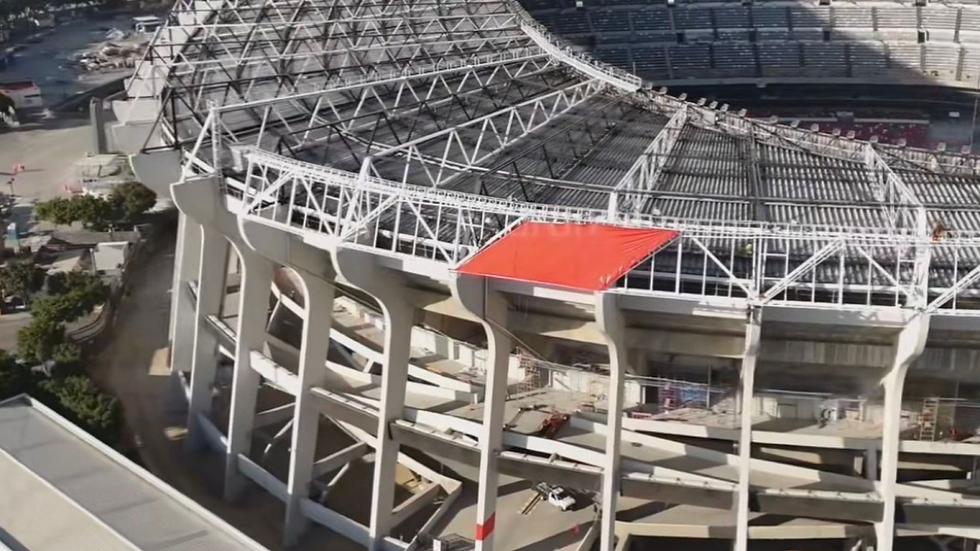
The latest phase of renovations at Mexico City’s iconic Estadio Azteca, part of preparations for the FIFA World Cup 2026, has ignited intense discussion on social media after newly released photos revealed a striking red material covering sections of the stadium’s upper structure. The images quickly went viral, with some Mexican fans jokingly comparing the appearance to a “street market tarp,” while others defended the modernization efforts.
The red material seen in the photos is an ETFE membrane (Ethylene Tetrafluoroethylene), a lightweight and highly durable polymer widely used in modern stadium construction around the world. Engineers selected the material to enhance the stadium’s resistance, lighting control, and overall functionality as it prepares to host matches during the 2026 FIFA World Cup.
Images shared by accounts such as @MXESTADIOS on X showcased the upper ring of the stadium wrapped in the red ETFE covering. Reactions online have been divided: some supporters praised the visible progress and modernization of one of football’s most historic venues, while critics argued that the design looks temporary or inconsistent with the stadium’s traditional identity.
According to journalists and infrastructure specialists, the use of ETFE is not merely an aesthetic decision but part of a broader technical strategy. The material is known for its flexibility, weather resistance, and ability to regulate natural light, making it a preferred choice in contemporary sports architecture across Europe and North America.
The controversy gained momentum because the images surfaced only months before the stadium’s planned reopening, which will include international matches ahead of the World Cup, including a FIFA international window scheduled for late March. The venue, now also referred to as Estadio Banorte due to sponsorship agreements, is racing to finalize renovations before welcoming thousands of fans.
Debate surrounding the redesign reflects a broader conversation often seen in major stadium upgrades: balancing innovation with tradition. Many supporters hope modernization efforts preserve the historic essence of Estadio Azteca, a venue deeply tied to Mexican football history and past World Cup moments.
The adoption of advanced materials like ETFE has also sparked technical comparisons with recently renovated stadiums worldwide, highlighting the contrast between early construction phases and the expected final appearance once the project is completed.
As construction continues, fans and analysts remain focused on every development. With Estadio Azteca set to play a central role in the FIFA World Cup 2026, the renovation represents not only an architectural transformation but also a symbol of Mexico’s preparation for one of the biggest sporting events on the planet.


Comments